Traditionally, patients experiencing periodontitis had only a few treatment options: dentures or lengthy and costly procedures that used bone grafting. Technologies have advanced in recent years to provide periodontal patients with a wider range of options. One of the most exciting technologies recently developed is the All-on-Four Teeth in a Day procedure, where all of the teeth on the top or bottom of your smile can be replaced using just four implants. Fewer implants mean a less invasive procedure with a decreased recovery time and fewer costs. Before you begin to pursue this treatment, what else do you need to know about All-on-Four?

What is All-on-Four?
In an All-on-Four procedure, all of the teeth for the top or bottom of the mouth are mounted on just four implants replacing those teeth in your mouth. Initially, the teeth themselves are a prostheses. Once the implant is safely secured and you have moved through the healing process, the temporary ones are replaced with permanent teeth.
Using titanium screws, the periodontist typically secures the All-on-Four implant to both the back and front of your mouth to anchor the implant and achieve balance. The procedure occurs while you are under anesthesia. Before the implant is secured, any teeth that are not functioning or severely decayed will be removed while you are under, making way for the All-on-Four. This process entails fewer individual appointments, helping you on your way to a speedy recovery.
What Kinds of Dental Conditions Can All-on-Four treat?
Severe periodontitis is treatable with the help of a periodontist. People with this condition have a serious and persistent infection that reaches from the gums and teeth into the jawbone itself. Over time, the jawbone loses density, causing teeth to become loose. Those suffering from periodontitis can experience debilitating pain and are at increased risk for lung and heart disease.
If you are experiencing pain in your teeth, gums, or jaw, it’s important to contact a periodontist to help you find a solution that is not lengthy or costly. This professional will meet with you to discuss what is going on in your mouth and how you can achieve relief. You need not live in pain; there are treatments that can help you.
How Long Will This Procedure Take?
Typically, the All-on-Four procedure takes a few hours, much shorter than a grafting procedure. This treatment is desirable because it can be completed in a single day. There is no intensive series of visits or repeated surgical procedures. All-on-Four also has a shorter recovery time than grafting and traditional implants. You may be able to function normally within a few days or a week. Because there is a shorter recovery time and fewer periodontist visits, All-of-Four is typically significantly less expensive than grafting. As with any procedure, it’s important to take it easy for several days following the surgery. This will help improve your results in the long run. With proper care, a dental implant can last you for the rest of your life.
Finding a Periodontist Who Can Do All-on-Four Teeth in a Day
Many periodontists offer All-on-Four Teeth in a Day, but it’s important that you choose a professional with an established reputation for quality. In Los Angeles, the Center for Advanced Periodontal & Implant Therapy works with patients like you to relieve pain and achieve results. You deserve your beautiful smile! Contact us today to begin the conversation.
Title Tag: All-on-Four Teeth in a Day | Dental All-on-Four Procedure
Meta Description: Using just four implants, All-on-Four Teeth can replace all of your top or bottom teeth in a day. Using prosthesis, the implants secure to your jaw and the permanent teeth are inserted later. This procedure is less costly and less lengthy than grafting. What else do you need to know about All-on-Four Teeth in a Day?
The post All-on-Four Teeth in a Day appeared first on Implant Perio CENTER.


 Let’s face it. There’s comes a time when your wisdom teeth just might need to come out. After all, through evolution, wisdom teeth are no longer needed to tear meat and chew nuts, as was the case with our ancestors. And now, they can do more harm than good, especially if they get infected. So, how do you know when you should have them removed? Here are a few common indicators.
 If you’ve looked at your teeth and gums in the mirror, you may have noticed that the top of the gum tissue doesn’t actually attach directly to the tooth. There is a small space between your tooth and gums and this space is called a sulcus. Unfortunately, this area can become clogged with both bacteria and food particles. For the most part, these can be removed with brushing and flossing, but in general, most toothbrushes lack the ability to reach the necessary 2-3 millimeters below the gum line. If the sulcus happens to be deeper than this, the bacteria and food particles will remain and can build up below the gum line, leading to both inflammation and/or swelling.


 The very last molars at the back of the mouth are called “wisdom teeth” because they tend to emerge much later than other teeth, typically in the late teens or early 20’s. Some scientists believe that these late-blooming teeth exist because our ancient ancestors had longer skulls and jawbones that could accommodate the extra teeth. Unfortunately, up to 85% of today’s adults typically need to have one or more of these teeth removed due to complications. Essentially, if one of the wisdom teeth doesn’t have enough room to emerge, it may twist, tilt or displace other teeth in an attempt to make room.
 While removing a wisdom tooth is typically a safe procedure, complications can arise. One of the biggest complications that may arise after a tooth extraction is the occurrence of dry socket. After an extraction, a blood clot naturally forms to protect the remaining hole. Dry socket, also known as alveolar osteitis, is a condition that occurs when the blood clot prematurely dislodges or dissolves, leaving bone and/or nerves exposed. This can lead to further pain and possible infection.
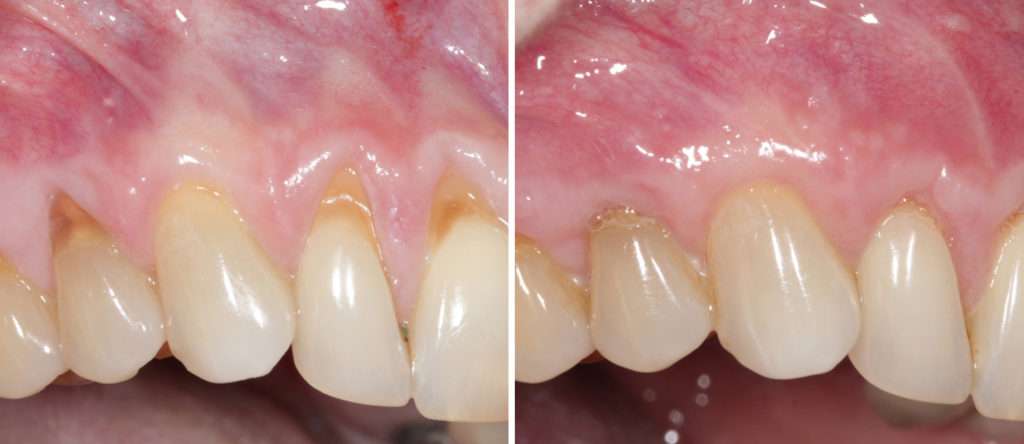
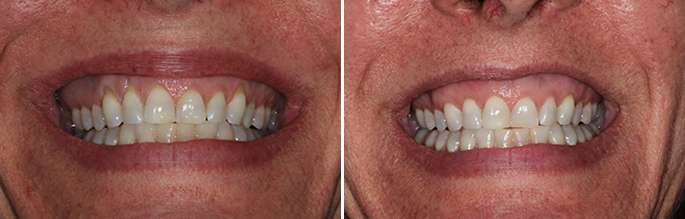
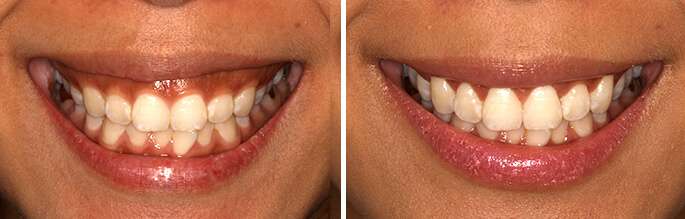
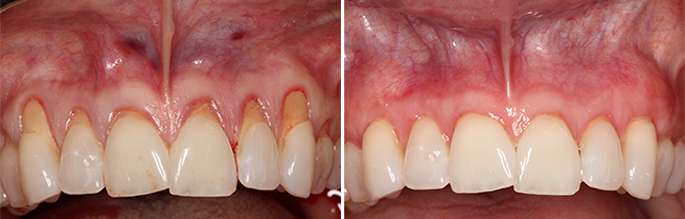
 Nothing feels worse than being self-conscious about your smile. More often than not, gum recession can lead to a loss in smile confidence.